Common Questions People Have Before Making a Big Change
|
What this covers
|
Most people make this decision in a single afternoon, under acute stress, with no background in the field and three phone numbers in front of them.
That is not a reasonable way to buy anything, and it is how nearly all addiction treatment gets chosen. What follows is the set of questions that most reliably separates facilities, together with what a good answer sounds like and which answers should end the call.
Why the Questions Matter More Than the Reviews
South Florida has an unusually dense treatment market. Marketing budgets vary enormously and clinical quality varies enormously, and from the outside the two are close to indistinguishable.
Reviews help less than expected here, because a person’s experience of a facility is shaped largely by the first week, which is the week they were least well placed to evaluate anything. Outcome data, which would settle it, is not published in comparable form by anyone.
What is left is process. The questions below are proxies, and they are good ones, because they ask about things a facility either has in place or does not.
The Accreditation Question
Ask: are you accredited, and by whom? What is your state license number?
Joint Commission accreditation requires external inspection. So does CARF. Both mean an outside body has assessed clinical practice against a published standard and will return to do it again.
Florida licenses substance abuse providers through the Department of Children and Families. The license number exists, it is a matter of record, and any facility holding one can produce it in seconds.
|
Answer |
What it means |
|
Names the body and the number immediately |
Routine question, answered routinely |
|
“We’re fully licensed and certified” |
Non-answer. Ask again, specifically |
|
Offers to email it later |
Ask why it is not to hand |
|
Changes the subject to amenities |
End the call |
The test is not really the accreditation. It is whether a basic factual question about the business gets a basic factual answer.
The Detox Question
Ask: do you provide medical detox on site, or do you refer it out?
On-site detox removes a transfer between facilities. If detox happens elsewhere, the person is moved at the point of lowest physical and psychological stability, and that handover is where a substantial number of people go home instead of continuing.
There is nothing improper about a facility that refers detox out. Many good outpatient providers do. It simply means the gap exists and somebody has to manage it, and you should know that before rather than during.
Follow up with: who covers overnight, and what are their qualifications? Continuous monitoring means someone clinical is awake.
The Levels of Care Question
Ask: which levels do you provide yourselves, rather than refer?
Recovery runs detox, then residential, then partial hospitalization, then intensive outpatient, then outpatient and aftercare. Every transition between those is a point where people drop out.
A facility providing all of them keeps one clinical team across the whole course. A facility providing two of them will hand the person on twice, and each handover has to be arranged by somebody at a point when arranging things is difficult.
Ask specifically what the next step is after the level being proposed, and who sets it up. A facility that answers immediately has thought about the sequence. One that treats discharge as the end of its involvement has not.
The Dual Diagnosis Question
Ask: who treats co-occurring mental health conditions here, and what are their credentials?
Dual diagnosis treatment addresses substance use and mental health together. A large proportion of people entering treatment are also managing depression, anxiety, post-traumatic stress or bipolar disorder, and very often the substance use began as an attempt to manage one of them.
Treating the substance use while referring the mental health condition elsewhere is a referral, not dual diagnosis care, regardless of how the website describes it. The answer to this question either contains job titles and qualifications or it does not.
The Money Question
Ask: what will this cost me, in writing, before admission?
Insurers must cover substance use treatment on terms comparable to physical health. What varies is how much, for how long, and what prior authorization is required.
A reputable facility verifies coverage as a matter of routine and provides the expected out-of-pocket figure in writing without being pushed. Vagueness about money at this stage does not resolve after admission. It gets worse, because by then the person is inside and the family is not in a position to walk.
What a Good Answer Sounds Like
The content of an answer matters less than its shape. Good answers are specific, immediate, and occasionally unflattering.
|
Question |
Weak answer |
Strong answer |
|
Accreditation |
We are fully certified |
Joint Commission, and the DCF license number is |
|
Detox on site |
We handle all of that |
Yes, on site, with overnight nursing cover |
|
Levels of care |
We offer a full range |
Detox, residential, PHP, IOP and outpatient, all here |
|
Dual diagnosis |
We treat the whole person |
Names the clinician and the qualification |
|
Length of stay |
Our program is thirty days |
It depends on assessment and coverage |
|
Aftercare |
We provide ongoing support |
Offers to send a sample relapse prevention plan |
The pattern in the middle column is worth naming. Every weak answer is a reassurance. Every strong one is a fact that could be checked afterward.
A facility with these things in place finds the questions easy, because the answers are simply true. A facility without them reaches for warmth instead, and warmth is the raw material of an admissions script.
The Answers That Should End the Call
Some responses are not warning signs. They are the end of the conversation.
Patient brokering is prohibited under Florida law. An offer of free travel, free rent, waived copays or cash in exchange for admission is a documented fraud pattern in this state, it has closed facilities, and it has resulted in criminal prosecutions. A family being offered a flight should understand what is being purchased and who is ultimately paying for it.
Alongside that:
- A guaranteed success rate. Nobody can guarantee that, and publishing a cure rate is a fabrication.
- Pressure to decide today, or a price that falls when you hesitate.
- Refusal to let you speak with a clinician rather than an admissions representative.
- A website with no named clinical staff and no physical address.
- A fixed program length quoted before anybody has assessed the person. That describes a billing cycle.
The Discharge Question, Which Almost Nobody Asks
Ask: what does aftercare look like, specifically, and can I see an example relapse prevention plan?
A relapse prevention plan documents specific triggers and responses. Not a leaflet about coping strategies. A written document naming this person’s particular high-risk situations, what they will do in each, who they will call, and what the early warning signs look like for them specifically.
The first ninety days after leaving structured care carry the highest relapse risk of the entire process. A facility without a concrete answer here is handing that risk back to the family at the exact point they are least equipped to hold it.
Ask whether there is an alumni program and whether it is active or theoretical. The difference is usually obvious from how the question is answered.
What the Phone Call Itself Tells You
This is the least scientific item here and probably the most reliable.
A good admissions conversation consists of somebody asking questions and listening to the answers. It includes being told what level of care is recommended and why. Occasionally it includes being told that this facility is not the right fit, which is the single strongest signal available.
A bad one consists of urgency, a discount, a car being sent, and a persistent sense that the person on the phone is working through a script toward a close.
If the call feels like a sale, it is one. That instinct is generally correct and it is generally overridden, because families in this position have been told to stop hesitating.
Where the Research Now Happens
Increasingly, this research starts with an AI assistant rather than a search engine, and it is worth knowing what that changes.
An assistant assembles its answer from published text about facilities: directory entries, review content, structured data on the business. It is reasonable at describing what a facility offers.
It cannot assess whether a facility is appropriate for a particular person, because that requires clinical information nobody has published. It also cannot tell you how the phone call will feel, which is the test that most consistently separates good facilities from well-marketed ones.
Use it to build the shortlist. Make the calls yourself.
The Short List
If there is time for only four questions, ask these.
- Accreditation body and state license number.
- Is detox on site.
- Which levels of care do you provide yourselves.
- What does aftercare look like, and can I see a sample plan.
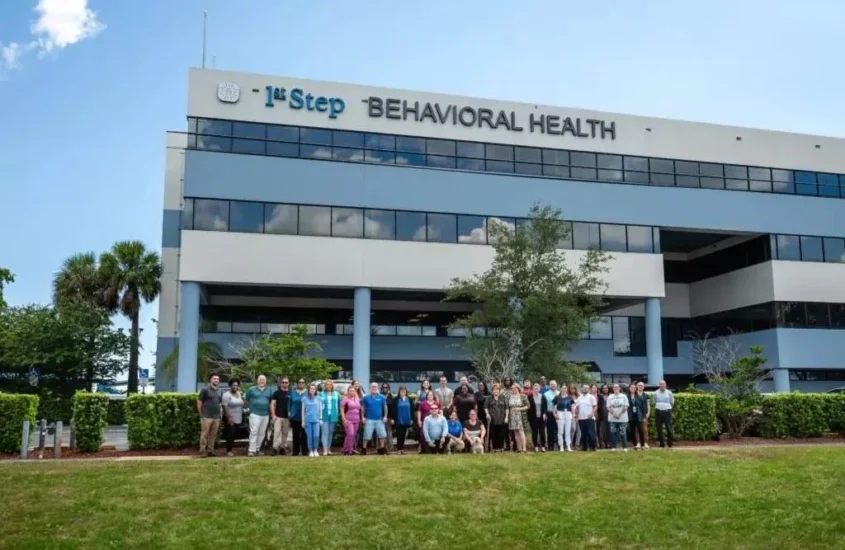
Facilities providing drug detox programs in Pompano Beach alongside the full continuum should answer all four without pausing, because for a facility that has them in place these are routine questions rather than difficult ones. The facility listing is worth checking against whatever the website states, since a mismatch between the two is itself a small signal.
The speed of the answer tells you nearly as much as the answer.